








Celia Bueno
Senior Staff Writer
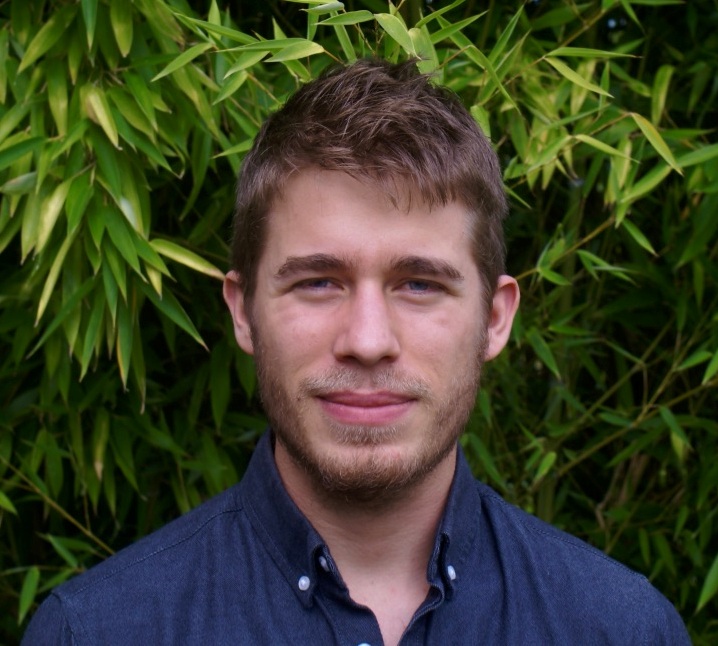
The Tsimane Health and Life History Project (THLHP) is a research initiative situated within the field of anthropology, specifically within the disciplines of biological anthropology and evolutionary sciences. It focuses on an Indigenous population native to the Bolivian Amazon known as the Tsimane. In an interview with The Bottom Line (TBL), anthropologist and biologist Yoann Buoro shares the most compelling insights from his research, which centers on cognitive decline as a consequence of depressive disorders.
The THLHP began in 2001 under the direction of Dr. Michael Gurven from UC Santa Barbara (UCSB) and Dr. Hillard Kaplan from University of New Mexico and Chapman University. It is currently still being developed in the Department of Anthropology at UCSB, under the continued leadership of Dr. Gurven.
Yoann Buoro, a researcher and third-year postdoctoral student, offers a unique perspective on a specific area of investigation within this long-standing research project.
“I come from an ecology and evolutionary biology master’s,” he explained. According to the Department of Ecology and Evolutionary Biology at Princeton University, this subdiscipline within the biological sciences is interdisciplinary in nature, seeking to answer complex questions about how animals, plants, and other organisms interact and behave in a constantly changing world.
Initially, Buoro focused his attention on the study of genetic diversity and the adaptation of freshwater organisms based on the shape of the rivers that made up their habitats.
However, other questions began to surface in Buoro’s mind, leading him to shift his focus to the field of anthropology. “As an ecologist, I always had small questions like, ‘But what about humans?’” As he found himself drawn to a discipline with a stronger emphasis on human evolution and development, he had the opportunity to complete his master’s in Toulouse, France. There, after taking courses with Professor Stieglitz, he came into contact with the THLHP for the first time.
“Questions like, ‘Why do so many of us suffer from mood disorders?’ and ‘If you live a different life in a non-industrialized setting (like the Tsimane), would you develop the same diseases as in an industrialized setting?’ really started to interest me, and I got the chance to become a grad student here.”
Currently, Buoro focuses his work on investigating the relationship between depression and the development of cognitive decline — which can manifest as diseases such as Alzheimer’s or dementia — as well as the influence of social context on the development of these conditions.
“My main result is that in the Tsimane, people who perceive themselves as low status see a strong association between their mood (whether they are depressed or not) and their cognitive performance.” In other words, the native Tsimane population perceives a link between their emotional state and a potential decline in cognitive performance.
This hypothesis is particularly relevant to the study of the relationship between emotions and mood — both from physiological and psychological standpoints — and the physical consequences these states can have on an individual.
“In our industrialized world, depression is extremely prevalent, and as people age, we see a lot of dementia emerging. People who experience repeated and/or prolonged depressive episodes are more likely to show depressive effects later in life, and chronic depression is strongly linked to brain disorders that develop later in life, such as Alzheimer’s.”
The development of this research project offers the opportunity to observe and study both the physical and mental health of populations that live lifestyles far removed from those in Western society. This is a crucial area for understanding human development from an evolutionary perspective.
“One thing I aim to explore more in detail in the future is the role of the social environment in cognitive and mental health within the very specific setting of Tsimane society.” This direction is sustained on findings by Dr. Gurven et al. (2017), who indicated that while education enhances cognitive performance among the Tsimane, cognitive aging patterns also reflect broader ecological and social influences beyond schooling alone.
Yoann is one of many UCSB graduate students who have chosen to spend their summer months working in a laboratory. While UCSB’s campus may seem quieter during the summer, many researchers continue working — because science doesn’t rest.