





Leslie Yang
Staff Writer
On Nov. 1, payments for the largest federal food program, the Supplemental Nutrition Assistance Program (SNAP), were officially halted as allocated funds were exhausted under what is now the longest federal government shutdown in U.S. history.
On Nov. 12, the shutdown officially ended after six Senate Democrats broke rank and voted for the Republican spending bill on the promise for a vote on the Affordable Care Act. President Trump directed states to start to “take immediate steps” to send out full SNAP benefits, ending the nearly two-week long upheaval that left SNAP-receiving households scrambling.
A United States Department of Agriculture (USDA) directive stated: “State agencies should immediately resume issuing combined allotments for November and December for newly certified applicants who apply after the 15th of the month.” The distribution of benefits may take up to a week or longer to reach families, depending on the state. Some states, such as California, started distributing payments before the shutdown ended and have claimed distribution of full allotments already.
SNAP, also known as CalFresh in California, is a federal program that provides food assistance to around 42 million Americans, most of whom are children, disabled individuals, and seniors. Around 5.5 million Californians use SNAP payments and according to Associated Students (AS) president Le Anh Metzger, around 5,400 UC Santa Barbara (UCSB) students are beneficiaries.
Halted SNAP benefits were anticipated throughout October and officially confirmed on Oct. 24 when the White House officially announced that it would not dip into reserve funds to continue payments in November.
On Nov. 3, after a ruling from federal court judges that deemed this refusal to support nutrition benefits unlawful, the White House announced that it would supply partial funding for payments. A series of rapid developments ensued as the White House took to the courts.
On Nov. 6, a federal judge ordered the Trump administration to fully fund food stamps for this month. The Justice Department responded, almost immediately appealing the decision.
Several states, including California, Oregon, Kansas, Pennsylvania, and New York, declared the release of full SNAP benefits on the same day despite the appeal.
On Nov. 7, UCSB’s Office of the Vice Chancellor released a schoolwide announcement sent out via email detailing the dates on which households would start receiving their full SNAP payments.
A few hours after this announcement, the Supreme Court put a pause on the judicial mandate to release full SNAP benefits for the month. The decision came from Justice Ketanji Brown Jackson who implemented the two-day pause to allow the Federal Appeals Court more time to more thoroughly review the Trump administration’s legal arguments.
On Nov. 8, the USDA issued a directive ordering states to undo any full SNAP payments that have already been released, and to hand out partial benefits as was decided on Nov. 3. The directive asserted that these payments were unauthorized and threatened to cancel federal cost sharing of SNAP, as well as hold non-complying states financially responsible for these payments.
In California, residents had already started receiving their payments and continued to despite these developments.
The Trump administration has confirmed that their unwillingness to fund the program is directly motivated by the Senate Democrats’ lack of cooperation on the proposed Republican spending bill that caused the government shutdown. Trump suggested at one point that SNAP payments will not be funded as part of a pressure campaign against Democrats to end the government shutdown.
The government’s willingness to follow through on these actions have caused lawmakers to reflect on the real importance of this program. Before this, the halting of SNAP benefits by any presidential administration had been unprecedented, leaving states little experience and allocated resources to prepare for the consequences.
The Bottom Line (TBL) conducted interviews with individuals across campus that have been making efforts to provide alternative nutritional resources to students who rely on benefits.
In an interview with TBL taking place before the federal decision to release full SNAP benefits, AS Food Bank Coordinator Crystal Bach described the increased demand the Food Bank faced when SNAP pauses were beginning to be announced: “We are expecting to see an increase in visits to our pantry, as we’ve already experienced in the past week since the delay in SNAP disbursements was announced. As benefits continue to be delayed, we anticipate this demand to grow.” Bach also stated that there was an observed increase in the amount of food items that students were taking.
When asked about what plans the AS Food Bank had to sustain their operations under increased demand, Bach detailed plans to start “outreaching about [their] donation processes for community members interested in supporting [them] monetarily or through in-kind donations of food and other physical goods.”
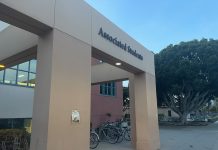
Metzger has been actively monitoring the situation and implementing solutions that could provide a safety net to students who might struggle because of these pauses such as gathering money across AS to transfer more funding to Basic Needs to expand their grocery voucher program. She was able to successfully get $15,000 in funding for grocery vouchers and $10,000 to Super Cucas to supply up to 900 burritos to students who receive SNAP benefits. Students who visit the University Center’s Basic Needs may be eligible to receive what is up to $100 in grocery gift cards. She has also been making efforts to publicize the need for increased donations across the UCSB community as well as compiling a list of initiatives that are working to combat food insecurity.
A few AS senators are also partnering with Santa Barbara Hillel, located on 781 Embarcadero del Mar, to host a weekly soup kitchen that hands out 500 containers of soup on Saturdays and Sundays. UCSB students can also look to the Miramar Food Pantry located in the Sierra Madre Villages.
Local Santa Barbara news sources have detailed more alternative food sources around the Santa Barbara community.