









Jeovany Tzilin Gomez
Contributing Writer
As the award-winning artist Kendrick Lamar continues to succeed in his musical career with his recent album “GNX” and his new title as one of the best hip-hop artists, his previous critically acclaimed albums might still be some of his best works.
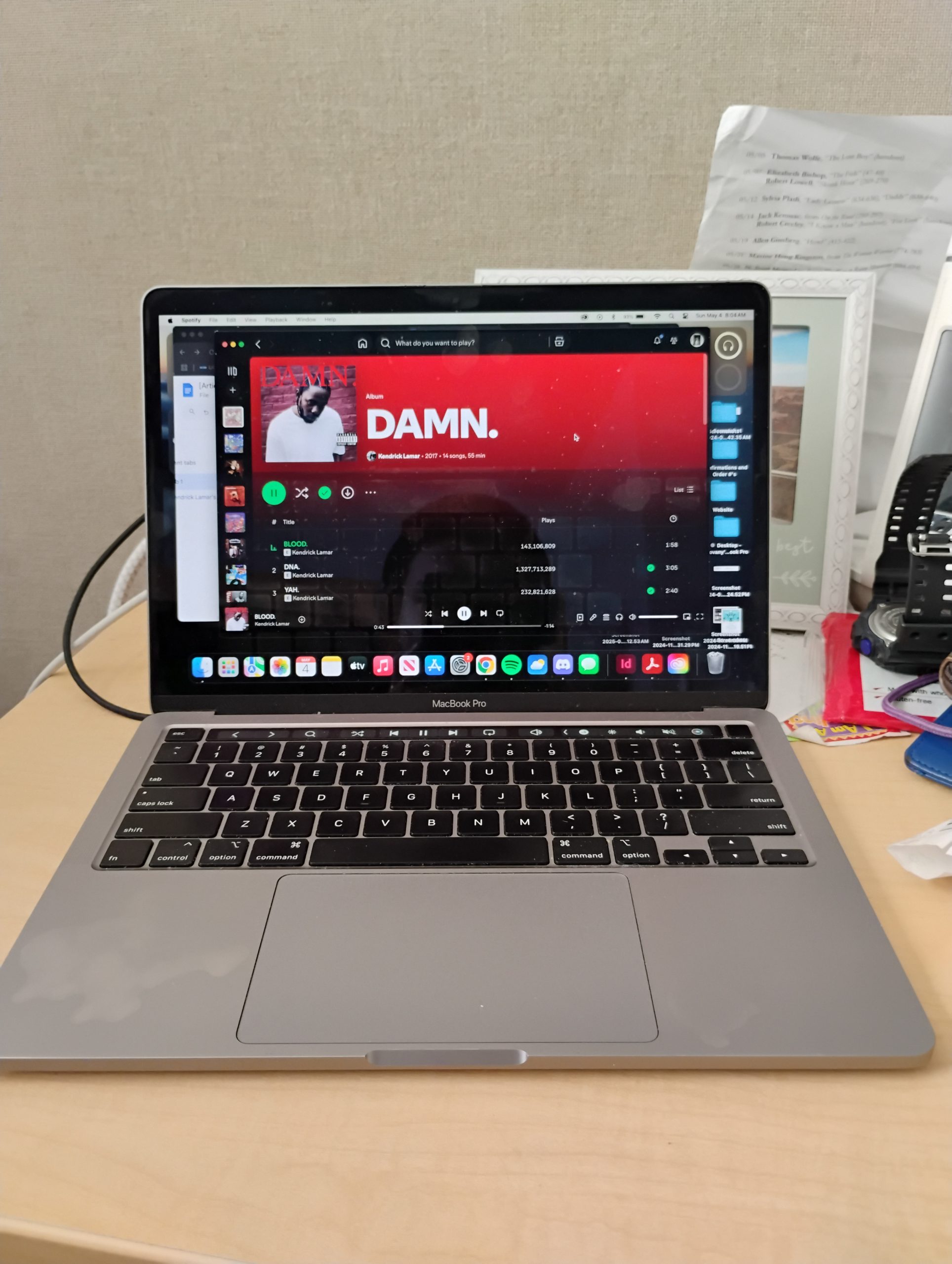
Kendrick Lamar’s fourth studio album, “DAMN.” was released eight years ago on April 14, 2017. People are still listening to songs like “HUMBLE.” and “LOVE.” as they each gained over a billion streams on Spotify.
Because the album became more popular even after its initial success, it’s typically the recommended album to new listeners for its digestible trap sound, comprehensive lyricism, and not-so-long song length. In the album, Lamar talks about the life of a Black American in the United States, reflects on his hip-hop artist status, and presents his view on the duality of virtues and vices (e.g. love and lust).
Despite the lyricism being less dense compared to earlier albums, “DAMN.” can be interpreted in many ways with the fact that it can be played backwards, which gives a different meaning compared to the original song order.
Lamar’s recent album “GNX” has received commercial success like “DAMN.”, but critics believe that “GNX” successfully brings the mainstream sound and catchiness that “DAMN.” failed to bring.
The main difference between both albums is that “DAMN.” presents more of the vulnerability that “GNX” lacks. Of course, “GNX” has its vulnerable moments with songs like “luther” and “gloria,” but the West-Coast-inspired project is more of a bright celebration of hip-hop culture than a reflection of choosing between wickedness or weakness in “DAMN.”
In honor of the album’s eighth anniversary, let’s look back on the meaning and relevance of “DAMN.” by analyzing the overall sound, the themes that Lamar covers, and what he is trying to say in each song.
“DAMN.” starts with “BLOOD.”, a short intro song that shows the blindness of justice in the United States (the speaker gets killed by a blind woman), a theme that is still prevalent/relevant eight years later.
“DNA.” summarizes Lamar’s Black identity since he has “power, poison, pain, and joy inside [his] DNA” and criticizing conservative views on hip-hop, even criticizing Fox News reporters that misinterpreted Lamar’s music as being more harmful than racism, telling them that “[his] DNA [is] not for imitation.”
“YAH.” elaborates a bit more on Lamar’s comments on Fox News in the previous track, saying that “Fox News wanna use [his] name for percentage” as a way of saying that he can prove that he is for the culture and not for the harm. When Lamar says “Yah, yah”, it’s his alarm of awareness that something is trying to damage his reputation.
“ELEMENT.” has a similar theme to some of Lamar’s recent songs, talking about gaining his deserved respect and claiming to be the best artist in the hip-hop genre. The instrumental of this song is very ominous and spooky, adding on to his menacing attitude to let people know that they can’t take him out of his element.
“FEEL.” presents Lamar’s vulnerability and opening up to his negative emotions with the repetition of the word “feel” used to emphasize the authentic display of his emotions. The song can be compared to several songs in “Mr. Morale And The Big Steppers” for its honesty in coping with emotions.
Lamar collaborated with Rihanna to make “LOYALTY.,” a call to action for people to be loyal in different ways, whether it’s in people or in things (like money).
The album presents the concept of duality, as he is a Gemini, with “PRIDE.” and ““HUMBLE.” In these songs, he discusses themes of regret for showing one’s inauthentic self and showcases how one can be prideful for being your authentic self.
The album continues the duality with “LUST.,” an experience with gaining pleasure through immoral means, and “LOVE.,” a moment of vulnerability Lamar dedicates to his current partner. The songs show how people decide whether they want a committed relationship or simple ways to gain pleasure.
The concept of duality lets the listener learn how complex decisions can be, emphasizing that virtues are considered “weak” and vices are considered “wicked.”
One of the songs from “DAMN.” that still maintains relevancy to this day is “XXX.,” featuring U2; it talks about the political issues concerning violence in the United States and how unjust the justice system is.
“FEAR.” is considered the climax of the album, where Lamar is honest about what he was afraid of both before being famous and after his peak in fame.
“GOD.” is a reminder that even if people feel powerful after achieving what they want in their lives, they are still mortal and anything can happen to them, so they have to keep living their lives.
At the end of the album, “DUCKWORTH.” is the song that shows Lamar’s clever and impactful storytelling on another level. This is part of the reason why “DAMN.” won a Pulitzer Prize and why Kendrick Lamar is the first hip-hop artist to do so.
Overall, many of the themes presented in “DAMN.” are still fresh for the listener’s ear as they navigate through the United States with the current administration and the ongoing struggles that people of color face in their lives. Kendrick Lamar always tries to give consciousness to his listeners in order for them to decide which path is better for them: wickedness or weakness.