










Kamelia Kaveh
Staff Writer
Despite the persistent narrative that college students are the laziest and least motivated group of adults, many of them work overtime just to stay afloat. Too often, we see the surface-level depiction of what it’s like to be a college student — a free four-year pass to party, drink, and hook up without any consequences. However, although it may be true for a portion of college students, the majority of students try to appear as carefree, but behind that image is a routine filled with classes, homework, studying, and the ongoing stress of working to support themselves.
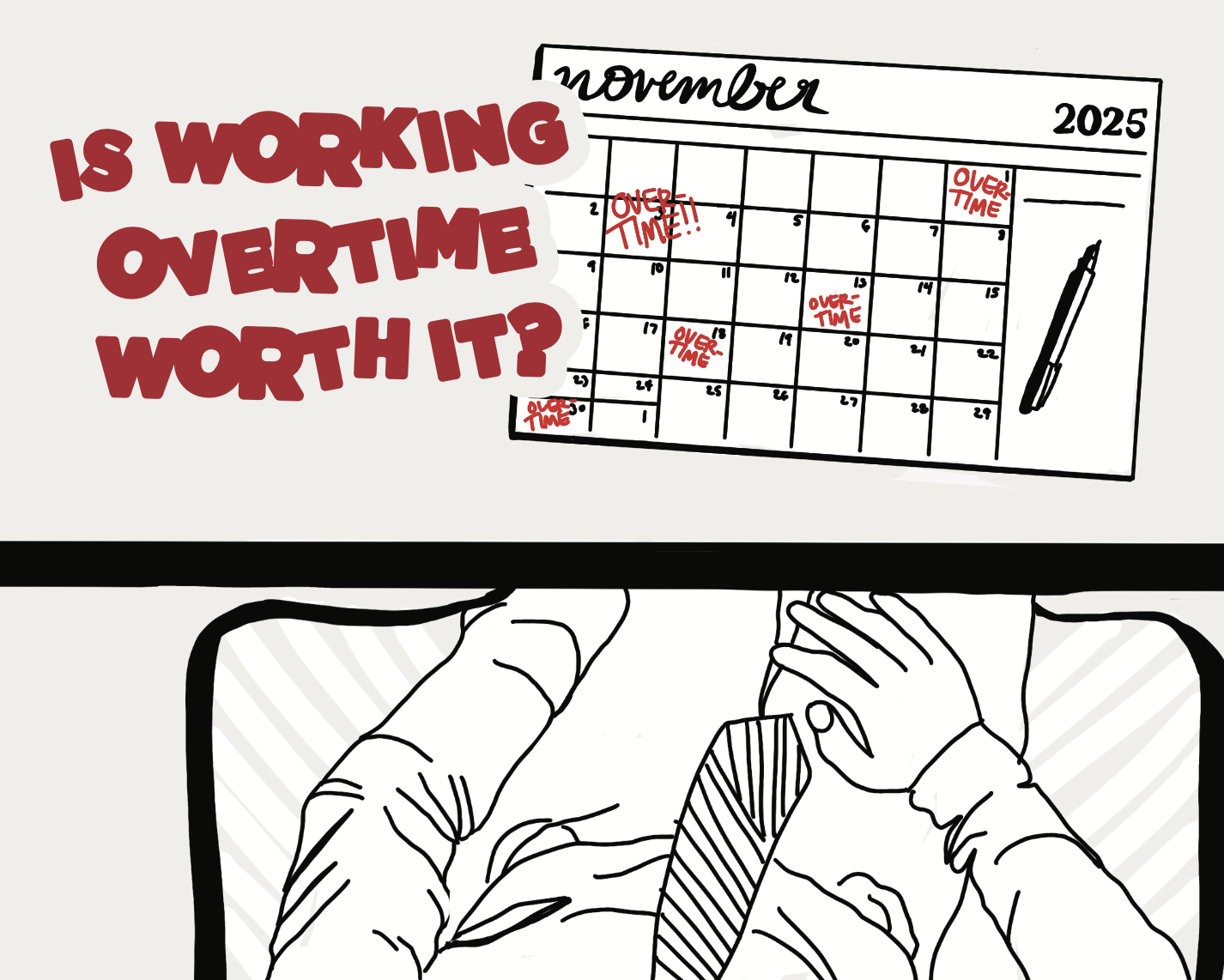
Working overtime may seem like the smart, responsible thing to do in hindsight. When you decide to stay those extra couple of hours or pick up an additional shift at work, all you can think about is how much more worthwhile that paycheck will be. However, we tend to forget about the cost to ourselves and everything else we could have accomplished in that time.
True, more hours equals more money, but those extra shifts often come at the cost of proper sleep, time to study, and your mental health. Many students end up in a cycle of overworking themselves just because it’ll help pay off rent or give them a little extra to spend, but they end up falling behind in school as a result. It’s a constant struggle between being too tired to focus on school but too broke to cut back on work.
Working overtime feels worth it when your paycheck finally hits your bank account and the relief washes over you, knowing you won’t be scraping by to pay for rent, tuition, and other necessary expenses. However, it’s easy to forget all of the exhausting days that came with it. That satisfaction fades quickly as the entire process repeats itself, leaving you falling behind not just academically, but socially, mentally, and physically too.
At the end of the day — or two weeks — I’ve realized that no amount of overtime can truly make up for what’s lost in the process: your time, rest, and sense of self. Money comes and goes, but the energy that we spend chasing it doesn’t return as easily. Those after-shift naps might keep us going for a while, but eventually, the exhaustion will run deeper. Also, don’t forget that being a college student who attends lectures, studies, and is part of clubs and committees is also a job in itself, even if it’s unpaid.
Maybe working overtime is worth it sometimes, but only if we remember that our well-being isn’t a shift that we can simply clock out of.
The sad truth is that not every student has the privilege to choose between rest and work. For many, those extra hours spent working aren’t for a pair of shoes or a night out, but for basic necessities. That’s why it’s so important for schools, employers, and professors to recognize the pressure students face and provide them with some grace and understanding. Maybe instead of questioning whether working overtime is worth it, we should ask why students must go to such extreme lengths in the first place. Until education and living costs become manageable, “worth it” will keep meaning survival instead of success — a pursuit too often achieved at any cost.