










Theo May
Photos Editor
“Ballad of A Small Player,” adapted from the novel of the same name by Lawrence Osborne, is the latest in a recent string of adaptations from Austrian-Swiss director Edward Berger. There’s much to admire, but unlike his prior films, “Ballad of A Small Player” doesn’t quite come together due to a flimsy script that both trivializes character conflicts and makes every exchange a bore to listen to.
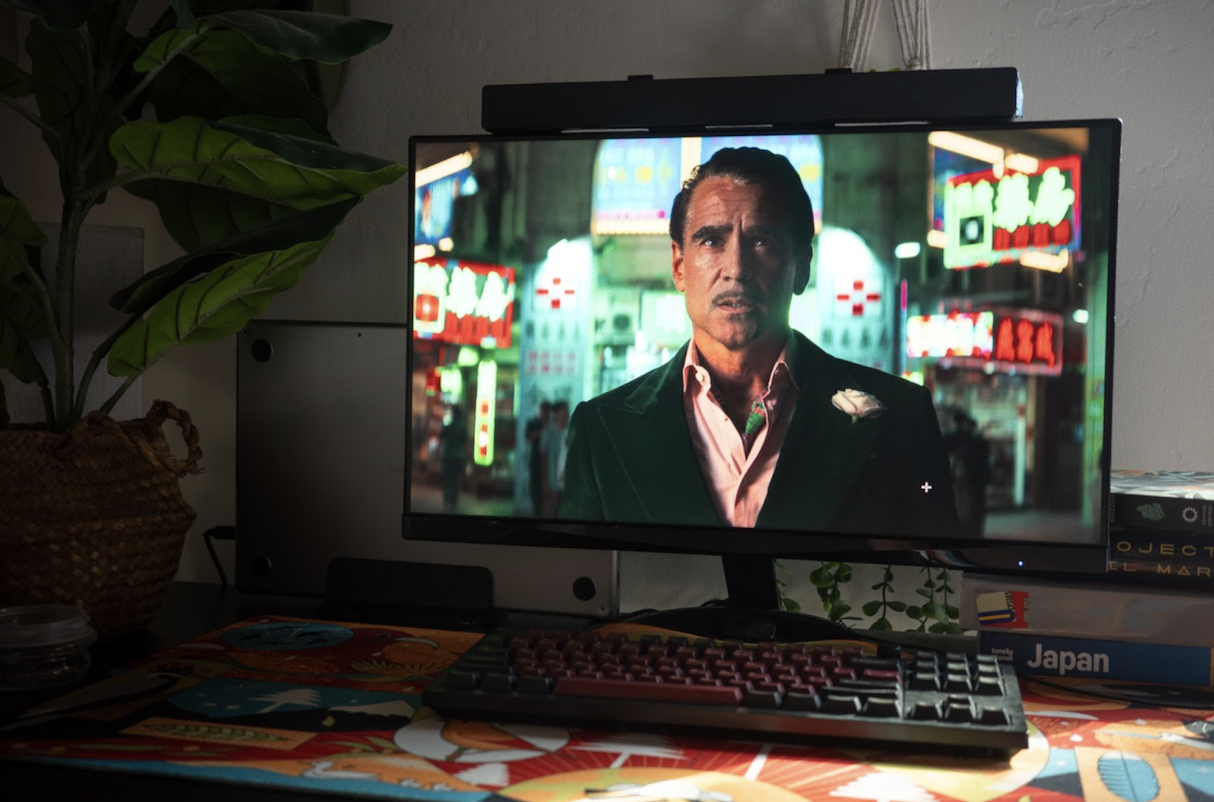
The film stars Colin Farrell as Lord Doyle, a small-time Irish gambler who wastes his days and money away in the casinos of Macau, awaiting a promised turn in his fortunes. He’s content with this arrangement, but with his finances in dire straits, time is running out as creditors and other shadowy figures start to close in. Still, a chance encounter with a mysterious woman, Dao Ming, played by Fala Chen, may offer Doyle a path to survival.
The premise is promising, and the visuals and soundtrack do it justice, with dizzying shots of Macau combined with an unnerving, brass-heavy score that makes the gambling sequences a delight. As Doyle checks each card with bated breath, the music perfectly swells to emphasize his desperation. The production designers also deserve credit for crafting “Ballad’s”’s atmosphere. Each set is distinct, from the tasteless opulence of the casinos to the loneliness of Macau’s rain-soaked streets.
Unfortunately, these qualities can’t make up for the script’s shortcomings. For a movie so focused on the unstable nature of a gambler, it’s a shame that there’s rarely anything plot-wise that surprises. The dialogue adds to this problem. Doyle and other characters seemingly only speak in melodramatic monologues that come off as cringeworthy. “Ballad” wants you to care, to be invested in their struggles, but that’s difficult when each just feels like a plot device. The cast does their best to make the material compelling, but there are only a few scenes towards the end where they manage to surpass the script’s inherent flaws.
Along with that, the film’s focus on Chinese mythicism is poorly handled. At its best, it feels shoehorned in to create meaning, but in certain moments, it feels like a return to Old Hollywood’s portrayal of Asian cultures as “exotic” and spiritual. Characters constantly recount parables of ghosts and spirits that do nothing but feel cliché. It’s hard to say how much of this is inherited from the original novel, but the script certainly doesn’t benefit from its inclusion.
Despite all I’ve listed here, the last 30 minutes are gripping in a way that makes you wish the entire film was. Doyle finally starts to feel like a real person, and that makes his final decisions all the more heart-wrenching. In this, you can see glimpses of what made Berger’s previous films captivating, but it arrives too late to save “Ballad” from its mediocre start.
What a thoughtful and incisive critique! I really appreciated how you framed the film’s ambition—director Edward Berger tackling the neon-soaked desperation of a gambler in Macau—and then clearly explained why it doesn’t fully land. Your comparison of the film’s lush visuals and star power (hello, Colin Farrell) with a lack of real emotional stakes was spot on.
I especially liked how you didn’t just say ‘it’s stylish but hollow’—you spelled out why the stakes felt abstract, how the tone wobbled between thriller and mood piece, and how the ending left the promise of redemption unfulfilled. Thank you for helping readers see both what the film sets out to do and where it stumbles. A very clear, fair-minded review.
Comments are closed.