










Jasmine Liang
Arts & Entertainment Editor
All eight undergraduate UCs have esports and recreational gaming clubs filled with passionate students, and four have official programs: UC Irvine (UCI), UC Berkeley, UC San Diego, and UCLA, the latter three of which operate under their recreational centers. UC Davis, UC Santa Cruz, UC Riverside, and UC Merced run their esports entirely through student-led clubs. An official program for UC Merced had allegedly been in the works, according to an alumni, but they currently don’t have any active teams.
The UCSB Esports Program (or Lack Thereof)
UC Santa Barbara (UCSB) previously had an intramural esports program under the Department of Recreation. While the program was discontinued in 2023, the website remains outdated. When asked why the program ended, Stephen Byrd, the Executive Director of Recreation, told The Bottom Line (TBL) that the intramural program received “lower levels of student engagement” and that patrons typically wanted “a more communal gaming experience,” which would be better suited for a gaming center — a resource the campus doesn’t have space for.
Now, UCSB esports falls under club jurisdiction. Teams operate through the student-run UCSB Esports, a Registered Campus Organization (RCO) that merged with their sister club Gaucho Gaming (GG) as a sub-division. Most GG officers aren’t dedicated to esports, but they help ad hoc with marketing, fundraising, ordering merchandise, and more.
Despite external support from GG, fourth-year Caren Chua, President of GG, explained to TBL that their esports teams still function independently. Without managers, coaches, or significant support outside of the team, players plan practices, trial new players, and find scrimmages and tournaments on their own.
Third-year Valorant Gold Captain Ryan Hublitz, the de-facto head of Valorant esports, shared his experience with joining and eventually running the Valorant teams. Hublitz joined the Valorant B team in his first year, which he described as “dysfunctional,” but with some time and care, he helped refine the team into a worthy competitor. In what Hublitz calls their “golden days” around 2023-2024, they were frequently attending tournaments and beating top teams.
“We emulated what the pros do,” Hublitz said — booking scrimmages, reviewing videos on demand (VODs), and designing a playbook. “At our height, we were around the top 20th nationally, which for our school is unheard of in any esport, especially because our school doesn’t support us very much.” At one point, the team paid out of pocket for a professional coach to review VODs with them.
Hublitz felt that the divide between “schools like us with no funding or support” and schools with scholarships, coaching staff, gaming rooms, and other resources only “gets bigger and bigger.”
Second-year Junjie Liu, the top laner for the UCSB League of Legends (LoL) team, told TBL, “I think support from the university is virtually zero.” Fourth-year Edwin Yang, the LoL team’s jungler, corrected him: “It is zero.”
All three players hoped for support or recognition in response to their accomplishments. “We were definitely hoping that earning second place at UCEI (UC Esports Initiative) would have helped us gain more attention,” Liu explained. Hublitz attested similarly, “At one point, it used to frustrate all of us. It’s like, where’s the school funding? We’re doing so well.”
Hublitz feels that UCSB esports is dying because it’s becoming more and more difficult to acquire players. “Getting [great players] together and getting the word out and making sure they actually care enough to be competitive — it’s really, really hard. And it’s only getting harder over time.”
Edwin Yang described the conundrum as a negative feedback loop, “where the players aren’t good enough, and then they don’t get funding, and then because funding’s not enough, the good players don’t play, and it … gets worse and worse.”
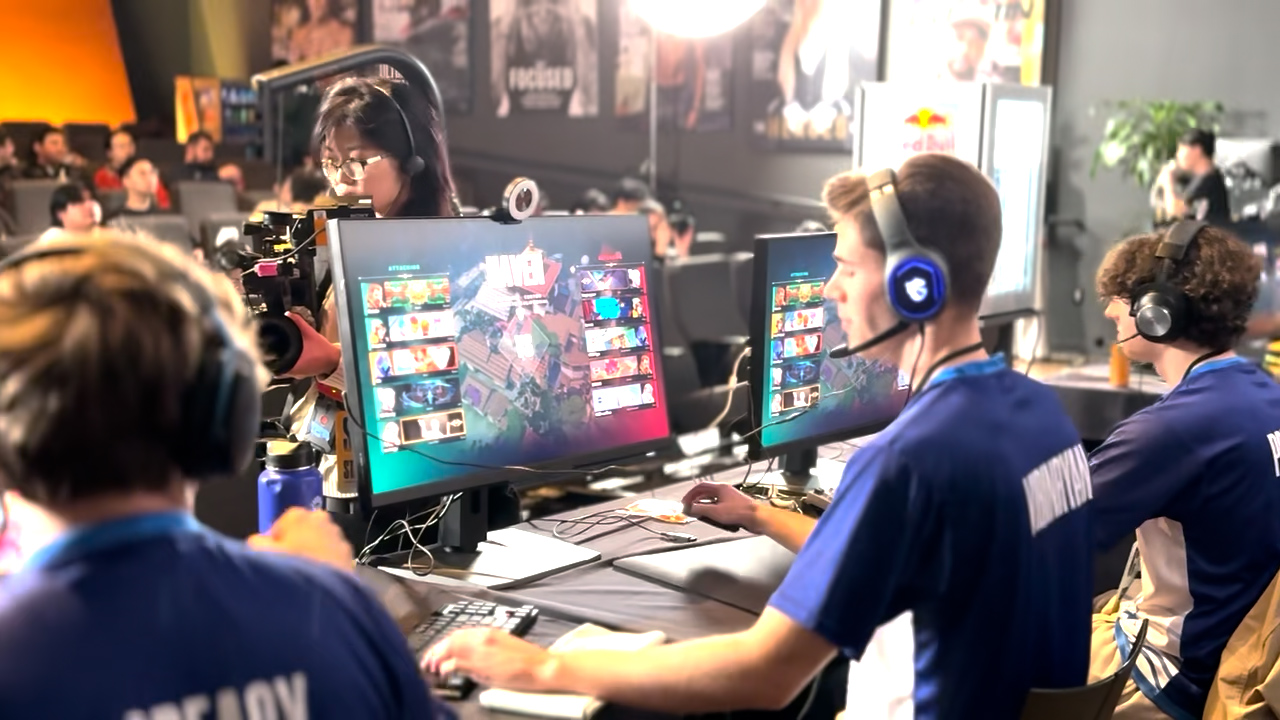
Chua pointed out another concern. “We only accept players if they can play on their own PCs. We don’t have a space to provide players if they want to train together or if they just want to play, period.” To even have temporary PCs for their first gaming convention, club members had to drive to Santa Monica and back to pick up and drop off borrowed equipment from their sponsor Gen.G.
When asked if they were interested in an official program, all four students agreed. “Video games and esports are definitely a rising trend right now and especially among college students … We have a huge gaming community right here. I think [an official program] is definitely something we need to petition on,” Liu argued.
But Hubritz had a caveat. “This is the harsh truth for me: it’s debatable how good for the school, income-wise, collegiate Valorant is,” he admitted. “[Esports] is a real industry, but on the college side, not as much. But I think they should still do at least something. At least a gaming room or a gaming center.”
Chua added that she knew this would be difficult for the school to implement since every organization on campus is fighting for space. She suggested that esports be recognized as a club sport. That way, UCSB could at least be competitive with other UCs.
UCSB Esports vs. Cal Esports
UC Berkeley has an official program through their Recreation Center, but they’re still lacking the same prestige and infrastructure for esports that UCI’s notoriously well-supported program has. But even when looking at a program mid-development, UCSB’s esports system doesn’t compare.
Recent-graduate Austin Yang, coach for Berkeley’s varsity and marginalized gender Valorant teams, explained to TBL that they have staff management, an esports center, and sponsors that help cover costs.
Ken Sirimontaporn, a support player for Berkeley’s varsity Overwatch team, felt that the Overwatch teams operated more independently. They received a set budget of around $500 and had access to the esports center, but otherwise had little contact with staff. Besides UCEI, the Overwatch teams hadn’t traveled to any tournaments for the two years Sirimontaporn had been at Berkeley. However, “in terms of space, they’re pretty accommodating … if players need [the esports center] for a match or anything [outside of operating hours] … like 80 percent of the time they’ll open it up. I think this year they’ve been a lot more flexible with what support they’ve given us.”
Both Berkeley teams have a larger network of people than UCSB’s teams. Cal Valorant has a coach and a manager for their varsity and junior varsity (JV) teams, while Cal Overwatch has a tier two coach for their varsity team, and Sirimontaporn helps coach the other rosters. Since both groups have multiple solid teams, they’re also able to substitute players across rosters.
Even with these affordances, Austin Yang expressed that his team is hoping for some more funding, and they’re doing outreach to sponsors to get more support for Cal Valorant, especially since they “just placed ninth in the whole country, proving that there’s a system that leads to results.”
Sirimontaporn feels optimistic about the future of Cal Esports. “I can see progress being made. I think we’re like a few years away from having a proper program that’s UCI level.”
One of the main ways Berkeley’s program differs from UCI is the lack of scholarships for esports students, which means that UCI often attracts players who were already semi-pro.
But Austin Yang and Sirimontaporn saw some upsides to Berkeley’s system. “Because we don’t have a full scholarship system, it’s also more open for people to come to the school and try out, and if they’re good enough, they’re able to compete … Instead of it being like a closed process where all the evaluation is done behind closed doors,” Austin Yang explained. “It has its benefits and drawbacks.”
Sirimontaporn expressed a similar sentiment, praising the program’s accessibility “to general people who are interested in gaming.” He noted that “the esports center is very full and popular.”
For UCSB students in esports, scholarships aren’t even on their mind. When Chua discussed the resources she’s hoping for, she talked about the minimum that other schools provide: “They have a small room with ten PCs … five PCs, even. And that’s good enough.”
“The hope is that the school kind of cares a little bit … You don’t have to do scholarships, you don’t have to do coaches, but give us the room, give us a reason to get us back into it,” Hubritz said.
Chua told TBL that she kept thinking about “the fact that our Valorant team was able to get that far [in UCEI] — what if we did support these players more? What if we did have a space for them to play at? What if we did have mandated training times, and they could go to a space and train, and then they have coaches that we provide? Would we be more on par with UCI?”
The Future of UCSB Esports
Luckily, Chua and other GG officers have already laid the foundation for more university support. As an intern for Student Engagement and Leadership (SEAL), she talked to Director Carlos Navarro about increasing support for esports.
Having started at UCSB less than a year ago, Navarro immediately noticed “how vibrant the esports community was here on campus,” especially with Chua’s insight.
Navarro explained that he’s trying to see how esports can be fostered with staff support. “We know the community exists, and both our esports clubs have been phenomenal in creating that. It’s like, what do we need to do to do our part? And for me, I took that upon myself to see what we can make happen with our resources.”
His latest development is getting a Student Fee Advisory Committee (SFAC) proposal approved and sent to the Chancellor’s Office for equipment, including 12 Lenovo gaming laptops, headsets, mice, and a storage cart to transport them, as well as other maintenance costs.
Navarro hopes that the laptops can help students overcome a barrier to entry into gaming. However, he acknowledges that “the laptops might not be the preference to all, but this is grassroots efforts, and maybe in the future we can get to the ideal location [better technology], but this is a good test to not make it about who can or can’t afford computers.”
After the laptops are acquired, Navarro wants to do a trial run and figure out next steps after gauging student response in order to build a more consistent program. A potential issue he’s looking to solve is how to share laptops equitably, especially since gaming can be a time-consuming activity. “How do we make sure that everyone is afforded that opportunity, to play with them, to utilize them? The other part, of course, is creating a community of care for our product that we purchase and make sure that it’s sustainable for everyone else in the future.”
Navarro’s main concern is meeting student needs, emphasizing that he wants esports to help students find community, develop their leadership skills, as well as attract prospective students.
However, Navarro also anticipates challenges around the current state and federal budget cuts, insufficient staffing, and satisfying students with limited capabilities at the start. Further, the search for permanent space has been futile so far. “I think we can find temporary spaces … but I think longterm, there will be a demand for permanent space, and that’ll be a challenge,” Navarro said.
Staff are starting to recognize the passion that has kept esports alive at UCSB without an official program. Despite the odds, organizers and players around campus have dedicated their time, money, and effort to building a community.
Hublitz attested that “esports and gaming was a great way to make new friends and get those like social bonds that [he] wouldn’t have had otherwise.” Some of his favorite moments included the team’s excitement after “win[ning] a round on stage or upset[ting] a big team in person.”
When asked about the most rewarding part about joining the LoL team, Liu looked to his teammate. “It’s honestly meeting Edwin. Meeting the rest of the team. I see these people with common hobbies as me, we play together, we spend a lot of time together … I’ve had a very fun time with these people, so this is definitely a part of my college experience.” Liu also shared that esports allowed him to fulfill a long-time goal of joining a collegiate-level team since he started playing LoL ten years ago.
To these UCSB students, more university support and recognition is crucial to keeping their beloved esports community thriving.
For those interested in helping the esports initiatives around campus, Navarro encouraged students to reach out. “I’m looking for really passionate and excited leaders … I’m hoping that [students] can really provide the vision for us, bring in peers that would be interested in this … I want to lead in collaboration with students.”