







Jeovany Tzilin Gomez
Staff Writer
Southern hip-hop duo Outkast, featuring André 3000 and Big Boi, celebrate the 25th anniversary of their most critically acclaimed album, “Stankonia”. With their revolutionary Southern hip-hop sounds, their top-tier lyricism, and their social commentary in the form of a dystopian nation known as Stankonia, Outkast made ripples that allowed today’s hip-hop artists to thrive in their colorful expressions.
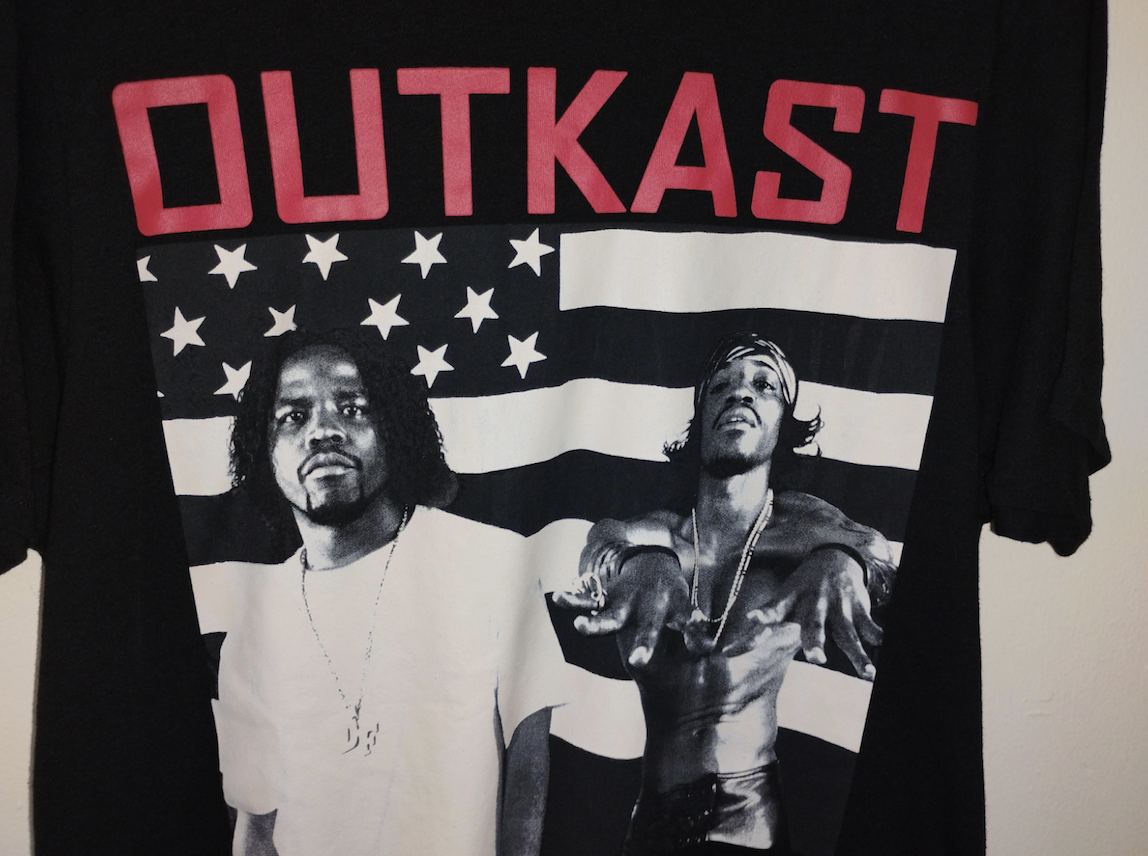
“Stankonia” was released on Oct. 31, 2000, or on Halloween. Coincidentally, the instrumentals sound more eerie and funky than their previous works. Their album covers showcase the two rappers posing with a black-and-white U.S. flag behind them: Big Boi, in a white shirt, leans slightly to the left, while André 3000 stands shirtless on the right, a gold necklace around his neck and his hands raised with his fingers spread out.
25 years later, “Stankonia” still stands tall with its innovative grooves.
“Gasoline Dreams,” featuring Khujo Goodie, is one of the opening tracks of the album, instantly starting with a bang. There are thrashy guitars and trippy drums, setting up the wacky sound for the rest of the album. André 3000 raps, “Don’t everybody like the smell of gasoline? / Well, burn, [expletive], burn, American dreams,” highlighting how people ironically accepted the harmful realities of industrialization in the United States, including air pollution, health problems, and poor working conditions. Americans have become accustomed to this corrupted system and, therefore, are not saving their “American dreams” from burning.
“So Fresh, So Clean” is one of the most popular songs on the album, essentially explaining how the hip-hop duo can be presentable at any occasion. Big Boi raps, “Teddy Pendergrass, cooler than Freddie Jackson sipping a milkshake in a snowstorm,” hyperbolically boasting about how no one, no matter how cool they appear to be, can outmatch his good looks as he tries to be a player. The two rappers know how to brag with fluidity and impress people whenever they want.
“Ms. Jackson” is one of Outkast’s top hits with a funky instrumental that samples a part of “Bridal Chorus,” which acts as an antithesis for the subject matter of the song: marriage conflicts. André 3000 raps, “Forever never seems that long until you’re grown / And notice that the day-by-day ruler can’t be too wrong,” accepting that marriage isn’t perfect and couples can recover the love they have for each other. In the chorus, André 3000 apologizes to Ms. Jackson, the mother of his fictional wife, for not loving his wife as he “apologize[s] a trillion times,” showing how much he wants to be forgiven.
“B.O.B. (Bombs Over Baghdad)” is an excellent example of Outkast breaking the boundaries of hip-hop by mixing funk and rock with rapid rapping. Big Boi raps, “Should’ve hit it, quit it, rag-top / Before you re-up, get a laptop / Make a business for yourself, boy, set some goals / Make a fat diamond out of dusty coal.” He encourages listeners to build their lives from the ground up, reminding them that things won’t be handed to them easily. While it contains some political awareness, it is mostly a song that promotes determination even through burnout and frustration.
“Humble Mumble,” featuring neo-soul artist Erykah Badu, finds the hip-hop duo reflecting on their careers and the impact they made in the hip-hop genre. André 3000 raps, “I met a critic, I made her [expletive] her draws / She said she thought Hip-Hop was only guns and alcohol / I said, ‘Oh hell naw! But yet, it’s that too …’” He talks about how their goal was to be different from everyone else in hip-hop, and how they clearly surprised people as they had certain stereotypes in mind that harmed the authenticity of hip-hop. Badu delivers some of the best metaphors on the album, including, “I’m wild, just like a rock, a stone, a tree / And I’m free, just like the wind, the breeze that blows,” tying into Outkast’s goal of creating their own art that is fresh and unique to the listener’s ear.
“?” is probably the strangest track of “Stankonia,” hence explaining the title of the song being a question mark. The instrumental mimics the feeling of being under the influence, especially with the alcohol sound effect. André 3000 asks questions about how someone can lose their way in life, and the answer, hinted through sound effects, is alcoholism.
“Stankonia (Stanklove),” featuring Big Rube and Sleepy Brown, is a funky and freaky love ballad like no other. The lyrics mainly contain sexual undertones as intimate as the sharp guitar picking during the chorus. For instance, Brown sings, “Open up your flower, please let me taste your love / Honeysuckle sweet, can’t stop / ‘Til I get every drip drop on my tongue.” It’s a moment for someone to enjoy a romantic time with their partner as an escape from the troubles in their lives. As the closing track of the album, it’s only right to end it off at an unexpected note, that is, after all of the chaos that goes on in “Stankonia,” there will be something to enjoy in order to forget it all.
Overall, “Stankonia” demonstrates a perspective for us to look at the United States and its flaws. It also serves as a template for risk-taking in hip-hop by experimenting with different sounds of funk, rock, and soul, as well as inventing new styles of rap. Outkast serves as the legendary duo of Southern hip-hop, and they will be inducted into the Rock & Roll Hall of Fame on Nov. 8. What they’ve achieved in the music world is a feat unmatched by any other artist, hence the name: Outkast.